The Adaptive Discovery Engine
Beyond the Filter: Predictive Interest Modelling
Replace rigid search inputs with a system that learns what buyers actually want.
The One-Size-Fits-All Problem
Traditional property search forces buyers through the same rigid filter funnel — bedrooms, price, suburb. But buyers don't think in filters. They think in feelings. "A home that feels like this." Existing platforms have no way to hear that — and no ability to learn it over time. This engine solves the preference capture problem by replacing static inputs with an adaptive, visual classification loop.


Our Framework: Swipe-Classify-Refine
(The Input): Swipe
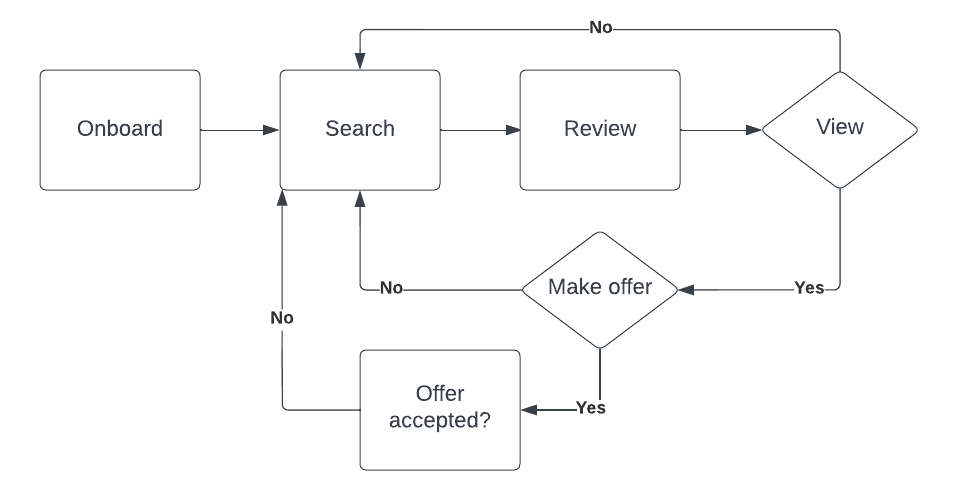
Preference Capture — building a taste profile from behaviour. Rather than asking buyers to describe what they want, the system observes it. Buyers swipe through 20 property images during onboarding, generating a rich preference signal before a single search is run.


(The Engine): Classify
Visual Reasoning — translating images into intent. An image classification model categorises each property across three style dimensions — Architectural, Character, and Suburban — giving the AI a structured vocabulary to match against buyer behaviour. Accuracy refined from 70% to 90% through multi-phase training.
Continuous Improvement — recommendations that get smarter over time. Every interaction feeds back into the model. The longer a buyer uses the platform, the more precisely it understands them — creating an evolving search experience that static filters can never replicate.
(The Output): Refine




From Blueprint to Execution: A Technical Walkthrough

Watch the deconstruction of the classification loop — from raw image input through style scoring to personalised listing output. The same feedback architecture that powers this build underpins our current work in situational intelligence and high-fidelity recommendation systems.
The Stack
Interface Layer: Swiping onboarding UI
Classification Model: Image style recognition (Architectural / Character / Suburban)
Training Pipeline: Multi-phase buyer behaviour feedback loop
Recommendation Engine: Adaptive preference-to-listing matching
Agent Layer: High-intent buyer to agent matchmaking